
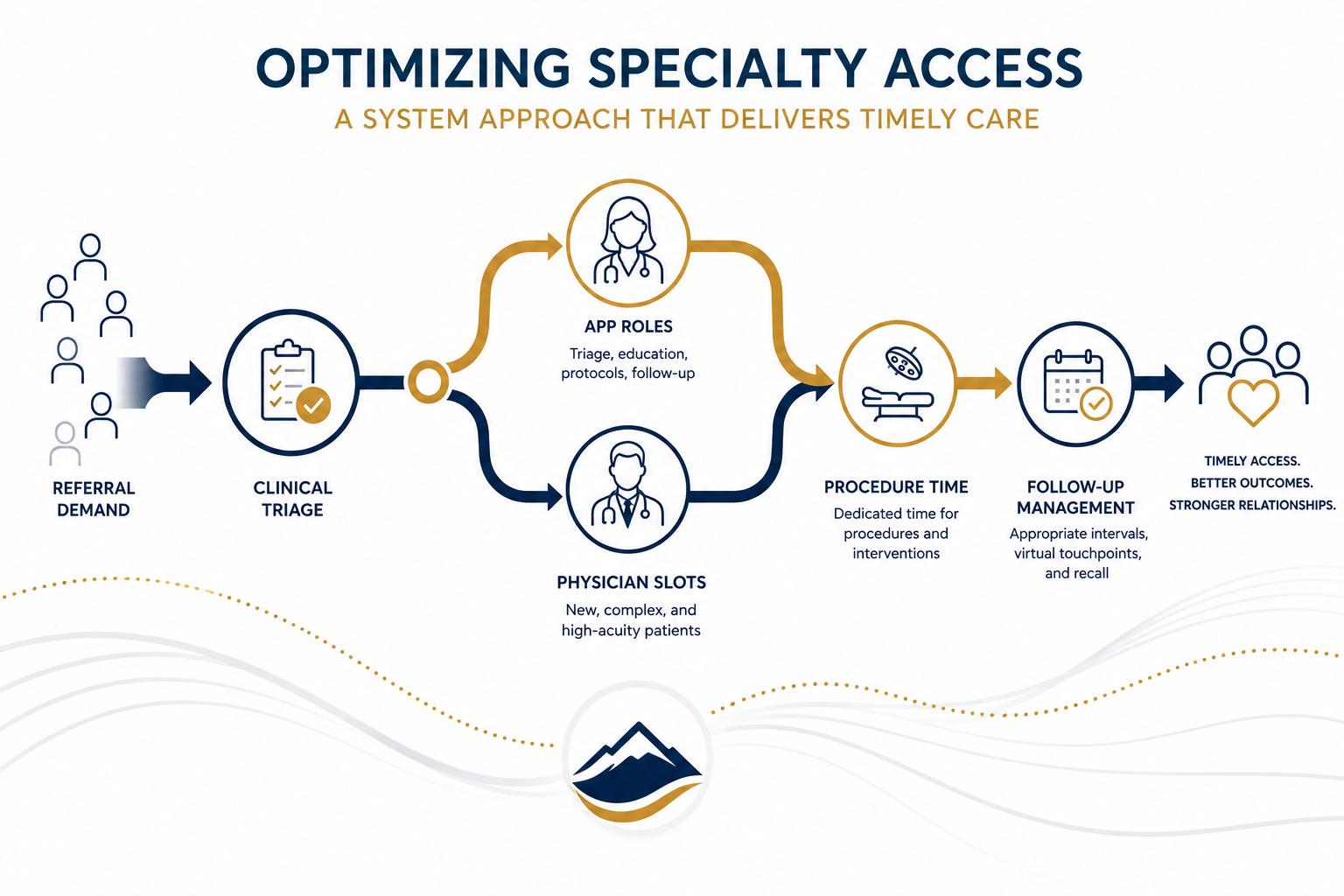
Recruitment is an important part of specialty access strategy. Without redesigning the operating model, however, new provider capacity can disappear into the same bottlenecks that created the access problem in the first place.
The Access Challenge
When specialty access is poor, the first solution often proposed is recruitment. More providers may be necessary, especially in constrained markets. But adding providers alone does not always fix specialty access.
If referral triage is inconsistent, clinic templates are poorly designed, advanced practice providers are underutilized, follow-up intervals are not disciplined, or procedures compete with clinic time, new capacity can be absorbed quickly without meaningful access improvement. Specialty access challenges often reflect broader patient throughput issues that extend across the continuum of care.
What Leaders Usually See
Patients wait too long for new specialty visits. Primary care physicians grow frustrated. Referrals leak out of the system. Specialists feel overloaded. Administrators pursue recruitment while the current clinic continues to operate with the same bottlenecks.
This creates a cycle where every access problem becomes a hiring problem.
The Operational Breakdown
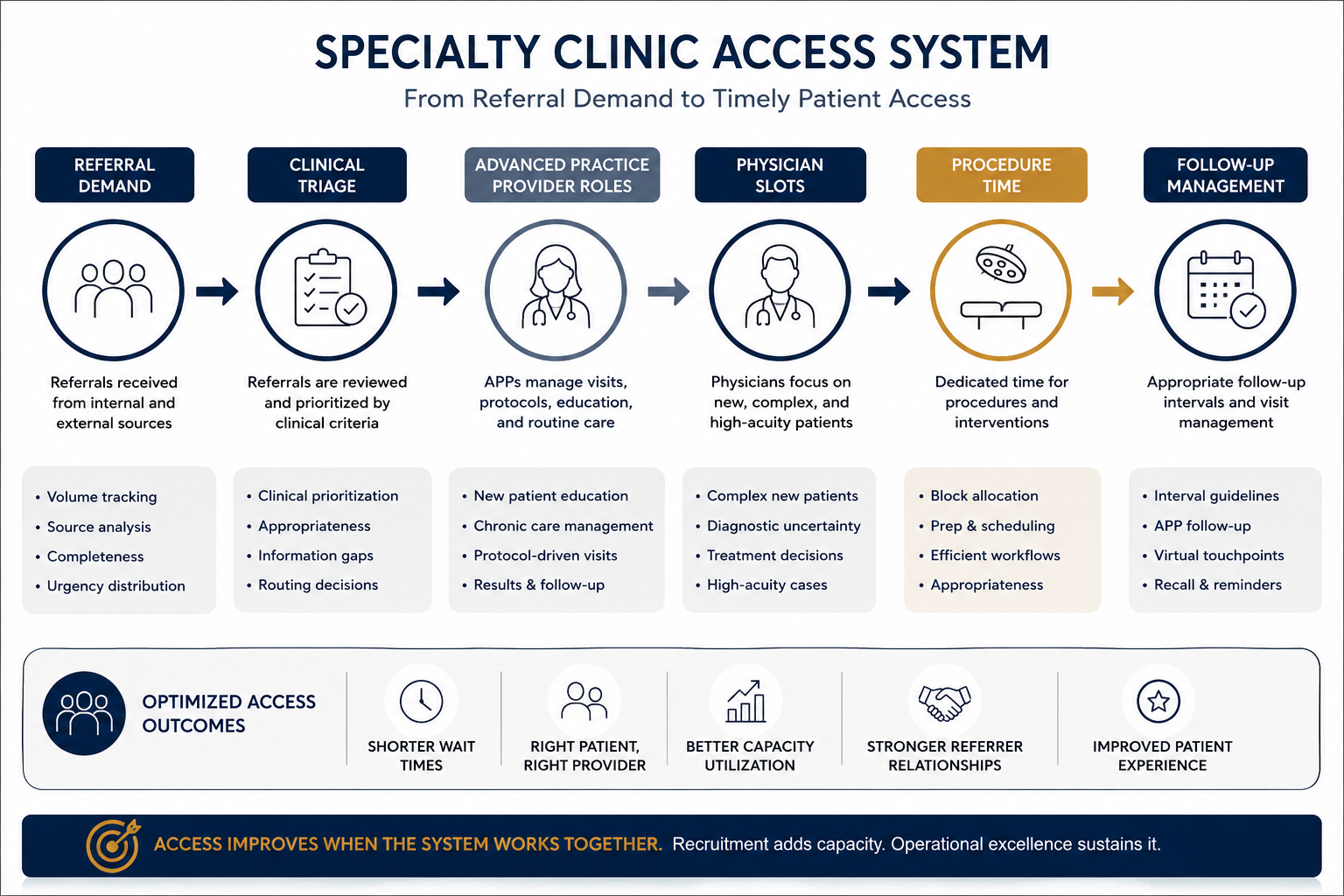
Specialty access is a system. It includes referral intake, clinical triage, visit type rules, provider and advanced practice provider roles, diagnostic prerequisites, procedure allocation, follow-up management, cancellation use, and communication with referring clinicians.
When any part of that system is weak, additional provider capacity may help temporarily but fail to solve the root problem.
Where to Start
Begin with referral demand and visit conversion. How many referrals are received? How many are urgent, routine, incomplete, or inappropriate? How long does triage take? Which visit types consume the schedule? What percentage of follow-ups could be managed by advanced practice providers, protocols, virtual touchpoints, or longer intervals?
These questions often identify capacity already present but not fully usable. Organizations looking for a structure evaluation can begin with SummitPoint’s Operational Assessment to identify the operational constraints limiting specialty access.
Questions for Leaders
- How many referrals are waiting by urgency?
- What visit types consume the schedule?
- Which follow-ups could be managed differently?
- Are advanced practice providers aligned to the access problem or only added to the schedule?
A Practical Perspective
A Practical Perspective
SummitPoint’s perspective is that specialty access improvement should combine recruitment strategy with operational redesign. Through our clinical operations consulting approach, we help healthcare organizations optimize referral management, clinic templates, advanced practice provider role design, and service-line governance to improve timely access to specialty care.
These improvements are part of SummitPoint’s broader healthcare consulting services, which focus on strengthening operational performance, improving patient access, and creating sustainable capacity across the continuum of care.
Recruitment remains an important part of a comprehensive access strategy, but it should be paired with template optimization, referral management, advanced practice provider role clarity, and service-line governance.
The goal is not just more appointments. The goal is timely access to the right level of specialty care.
The Leadership Question
Before adding another provider, has your specialty clinic redesigned the access system around referral demand, visit type, and clinical priority?